
Test NG Framework Scripts
Once the selenium project is created, those scripts can be run in the AIQ platform as a functional or as a load/performance test.
A simple script was created for the demo purpose which launches the Firefox browser and it navigates to a webpage “http://www.google.com ”
-
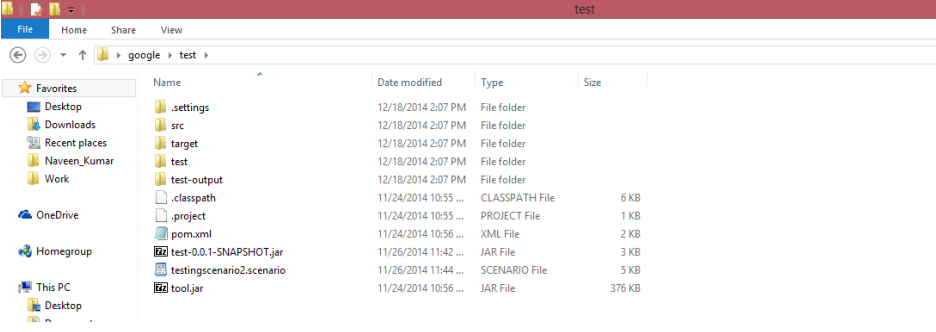
Add “tool.jar” file inside the project folder as seen in the above screenshot. This jar file is used to add the required steps in the scripts that in turn will be displayed in AQI's step times report (which will be discussed later)
-
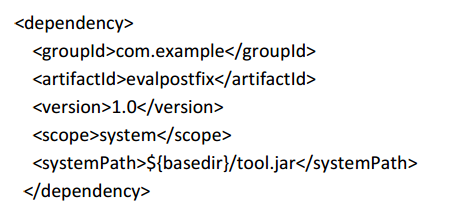
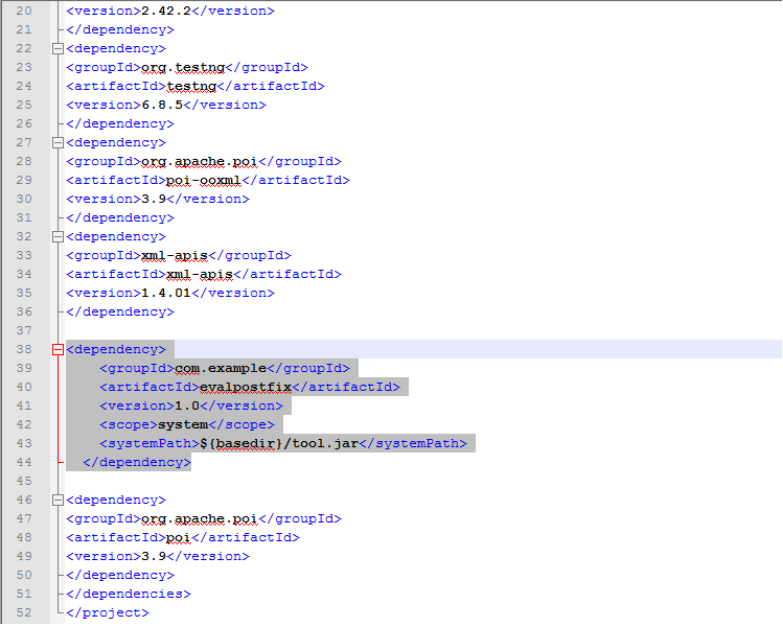
‘Tool.jar’ file will be located at “\AIQ\TestNode\bundles\tool\1.0” Once added, Open pom.xml in your favorite editor and add the below dependency lines
-
Open the project in your favorite IDE, either NetBeans or Eclipse
-
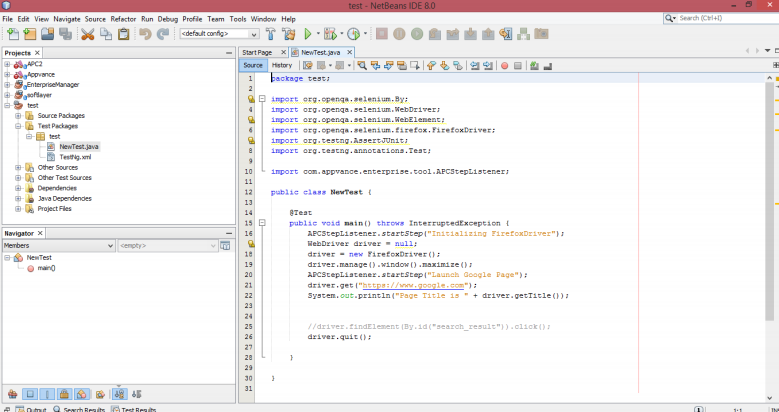
In the above-mentioned script, notice a few lines being added that reads as
UTPStepListener.startStep("Initializing FirefoxDriver");
These are the step listeners which users need to add to the script; these step names will be displayed in AIQ Reports along with the time in milliseconds it took to execute these steps.
Along with this user should add this import statement at the beginning of the script as seen in the above screen-shot to support these step listeners.
“import com.appvance.enterprise.tool.UTPStepListener;”
-
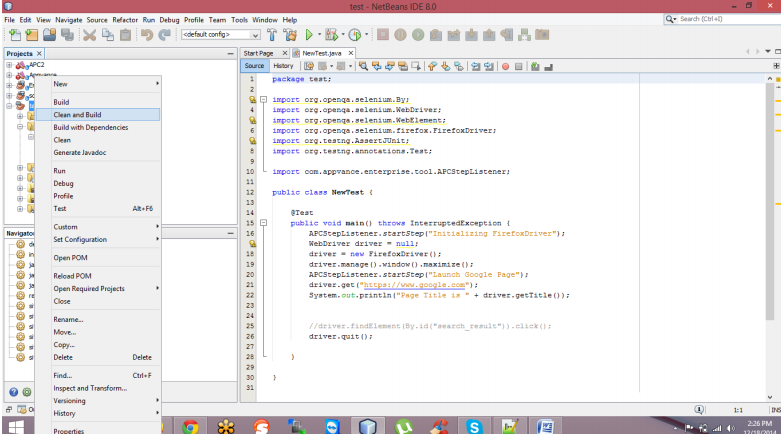
Once the AIQ step listeners have been added, we can compile (Clean and build from Net-beans) the project to create the jar file
-
Right-click the project and click Clean and Build
-
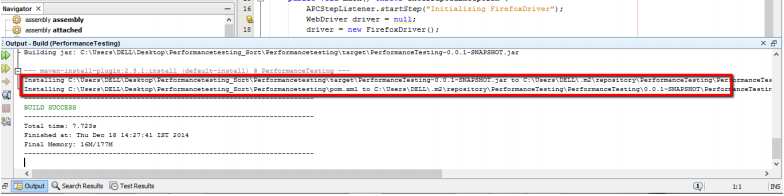
The jar file will be created in the default folder mentioned in Netbeans
-
Navigate to the folder as displayed in the Netbeans output screen, and copy-paste the created jar file into the Selenium project
-
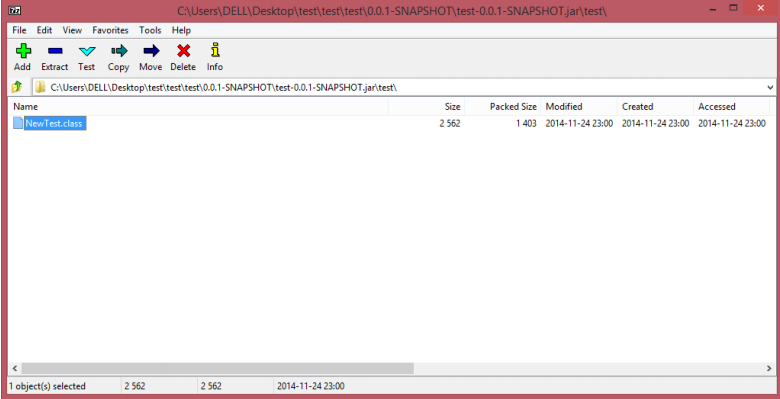
Open the created jar file in 7-zip software to make sure it contains the class files created, if not add those class files into the jar file by dragging them into the 7-zip folder
Class files will be created inside the project folder itself after compiling the same in Net-beans
Class files will have the same name as that of the java file name except the extension would be .class.

-
Make sure this class file is available in the jar file created, this is the only file that will be used in AIQ
-
Launch AIQ and navigate to Scenario Builder for creating the Scenario
-
Navigate to the Use-Case panel and select type as TestNG and select the jar file created from the project
-
Provide the TestNG Class, this will follow the format “Package.classname”
In our case, it would be ‘test.NewTest'
-
Select the required percentage of logs and the correct database from the Options Panel
-
Save the scenario and play
-
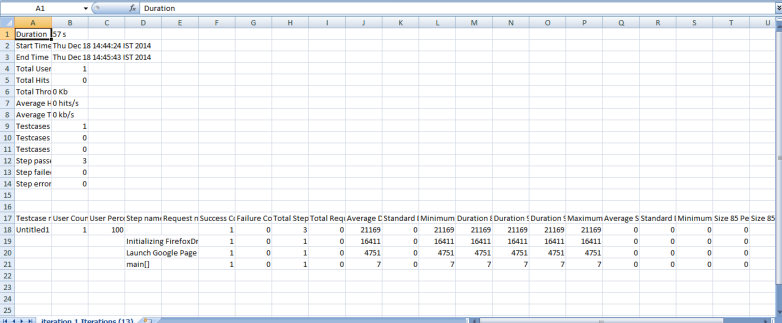
As seen in the above Screenshot, the AIQ step listeners added in the script will be displayed as separate steps with step durations.
The same information with more data can be seen in the Step times report
The same scenario can be converted to a Load test by using the test-type panel which is used to define the iterations and users and many others and run the load/performance tests.
Possible issues:
-
If the script is dependent on Oracle drivers and if the below error message is seen.
java.lang.ClassNotFoundException: oracle.jdbc.driver.OracleDriver
Either Login Failed or The Order link is not visible
Solution: Please add a couple of jar files “classes12.jar” and “ojdbc14.jar” under resources in Scenario Builder.
Path of the jar files: \UTPv2.0 \TestNode\bundles\oracle\10.2.0.5
-
Is Firefox not launching and getting some time-out issue? Make sure all the Firefox processes are killed from all different users and re-run the test
-
Please make sure to add the dependency in pom.xml and add ‘tool.jar’ to see the AIQ Step listeners in the AIQ controller
Working with Selenium scripts (Java) in Appvance PerformanceCloud.
-
A new java class can be created
-
Selenium bundle will be added in Appvance Scenario Builder upon selecting Java / TestNG test type in the test case panel
-
All the required jar files can be moved to a new folder called lib in the project
-
All the required jar files are to be added as resources in Scenario Builder
About AIQ Step listeners
Few modifications need to be done for the project before using the script in IQ to see the steps which we call Step listeners.
Add “tool.jar” file inside the project folder. This jar file is used to add the required steps in the scripts that in turn will be displayed in IQ’s step time report. ‘Tool.jar’ file will be located at “\AIQ\TestNode\bundles\tool\1.0”
Open the project in your favorite IDE, either Net-beans or Eclipse.
In the project few lines can be added where required which reads as UTPStepListener.startStep("Initializing FirefoxDriver"); These are the step listeners that users need to add in the script; these step names will be displayed in AIQ Reports along with the time in milliseconds it took to execute these steps.
Along with this user should add this import statement at the beginning of the script to support these step listeners.
“import com.appvance.enterprise.tool.UTPStepListener;” Once the AIQ step listeners have been added, we can re-compile (Clean and build from Netbeans) the project to create the jar file or use the above process mentioned for Eclipse.
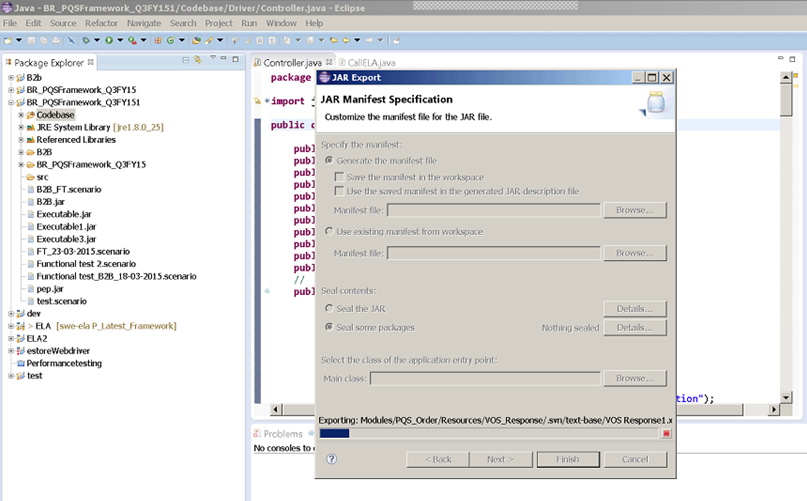
Building jar in Eclipse:
-
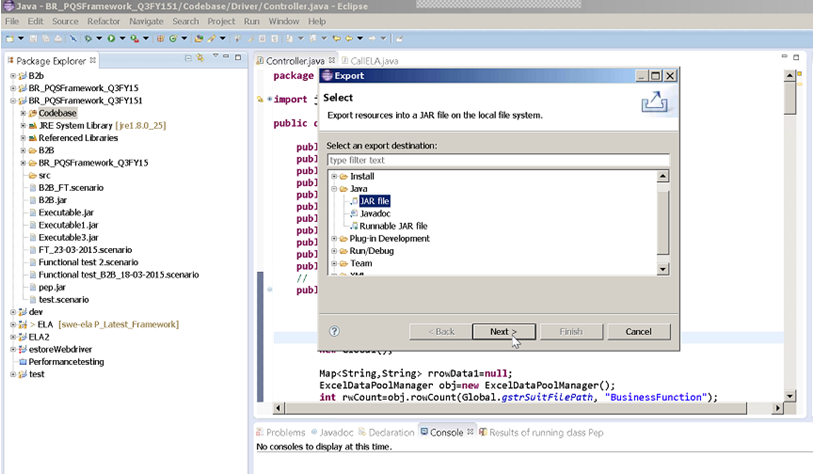
Right-click the project > Click Export
-
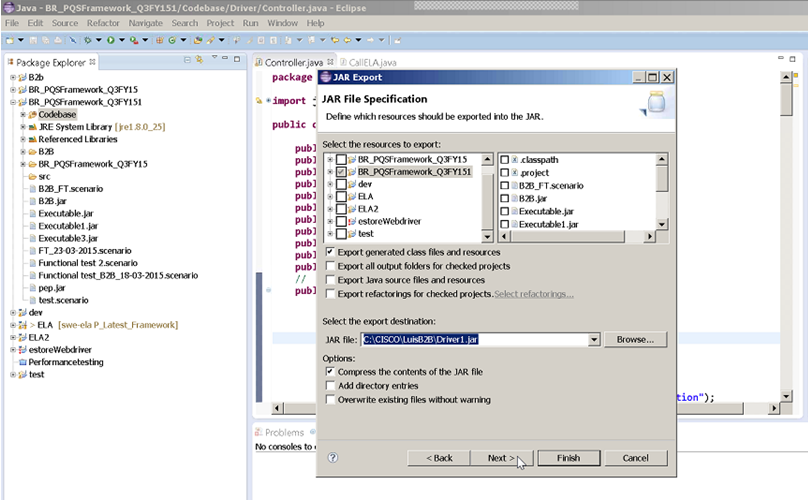
Under Java, select the JAR file as the option > Click Next Select ‘Export generated class files and resources and provide the destination path and in the Jar file and click next.
Note: Make sure all the previous jar files are deleted (if created any earlier) from the destination folder
-
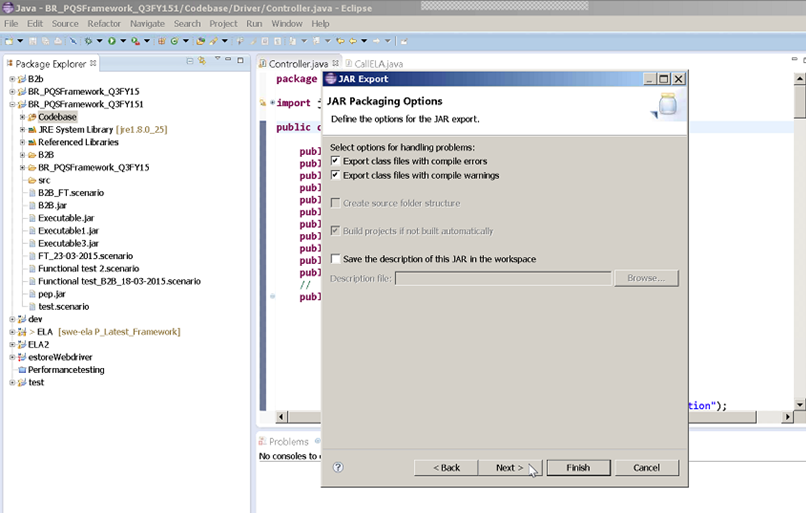
Click Next
-
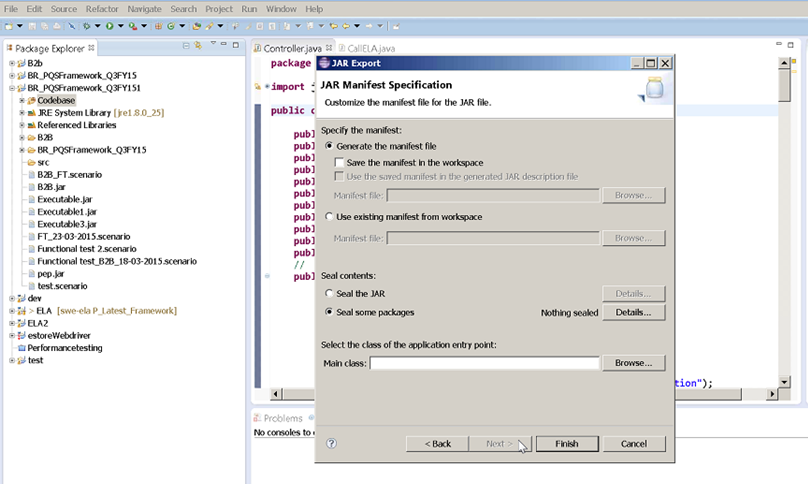
Click Finish
-
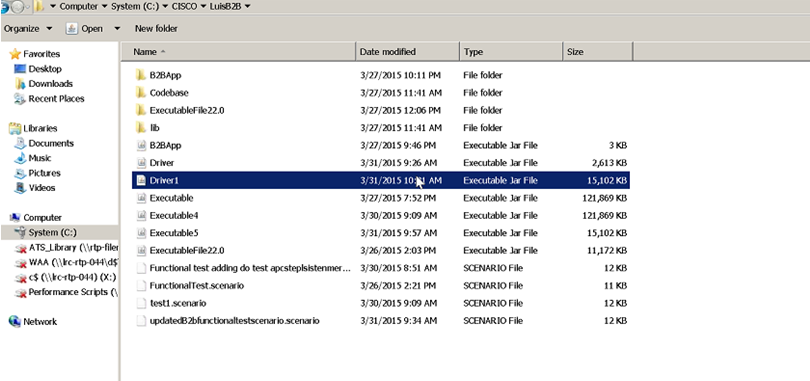
A new jar file will be created with this which will be used as a resource in Appvance Scenario Editor
-
Creating Scenario in Scenario Builder:
-
Open Scenario Builder from the Start screen.
-
Navigate to the TestCase panel and select Java from the test-type drop-down.
-
Select the generated jar file that was created from Eclipse or Net-beans.
-
Provide the class and the method name. In our case, we can provide the class and method name as “appvance.test.CallB2B” and “doTest” respectively.
-
Navigate to the Resource panel and Click Add Bundle and add httpclient “4.3.4” as a bundle, then add seleniumrc 2.43 bundle.
-
Click Add resources and add all the required jar files which were moved to the lib directory earlier.
-
Save the Scenario and run the test as a functional test to see the results in the Test Controller, AIQ Step listeners added will be shown in the reports.
-
The same scenario can be converted to a Performance/load test from a test-type panel.
-
Last updated: June 26, 2023
If you have any feedback on this topic, please contact us at documentation@appvance.ai