Configure Jenkins Integration for AIQ

AboutConfigure Jenkins pluginIntegration configurationfor exampleAIQ

    Use

    Jenkins

    Information within illustrates howintegration to configuretrigger, and run scenarios from Jenkins

    Applicable for both Jenkins installed locally as well as in the cloud, such as using Cloudbees-Jenkins

    Local Jenkins Install Prerequisites

      Install Jenkins using https://jenkins.io After install, Jenkins automatically launches using port 8080. To change the port number, locate Jenkins/jenkins.xml and modify the --httpPort argument
      For example: -Xrs -Xmx256m -Dhudson.lifecycle=hudson.lifecycle.WindowsServiceLifecycle -jar "%BASE%\jenkins.war" --httpPort=8081

      Restart Jenkins
      From a Windows Server machine, go to Server Configuration and select Restart Jenkins Service

      Install ANT using http://ant.apache.org/bindownload.cgi Open Jenkins Click Manage Jenkins Click Configure System Scroll to Global Properties Check Environment variables Enter PATH in the Name box Enter the Java and Antpaths in the Value box as illustrated below
      Click Save (Changes)

      Configure Project to Point to Plugin

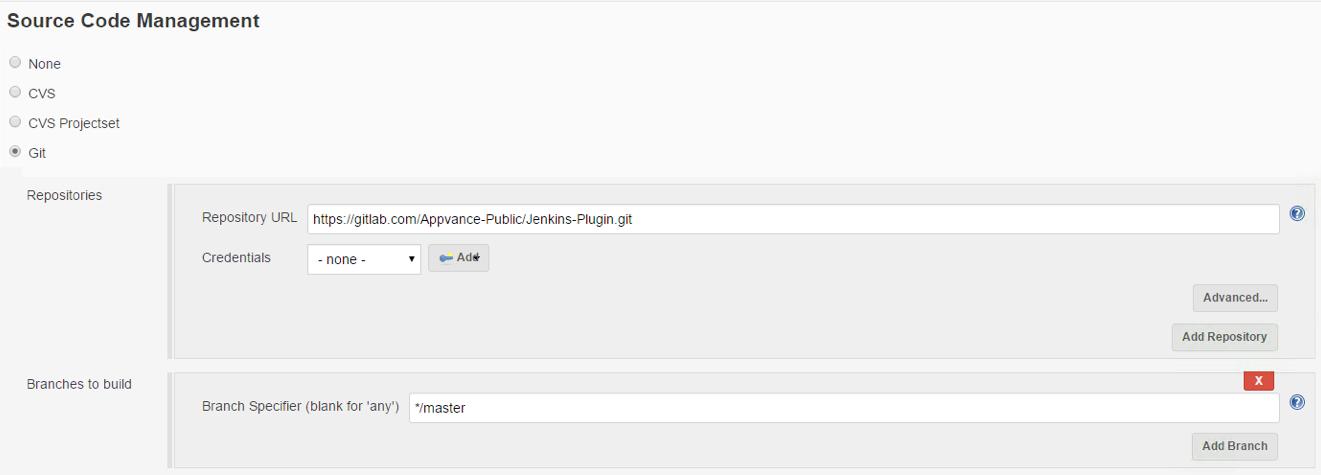
        Create a new,orchestrate, or opentrack andAIQ-related existing, Jenkins project Locate Source Code Management Options based on Jenkins Plugin location
        1. If hosted by Appvance, select Git and enter https://gitlab.com/Appvance-Public/Jenkins-Plugin.git in the Repository URL box

          NOTE: Please make sure to install git on the machine where Jenkins is installed, once installed please restart Jenkins service.
          Download git from https://git-scm.com/downloads based on your operation system.
        1. If self-hosted
          1. Select your source code management provider and enter the URL to your hosted plugin in the Repository URL box

        Configure Scenario to Run

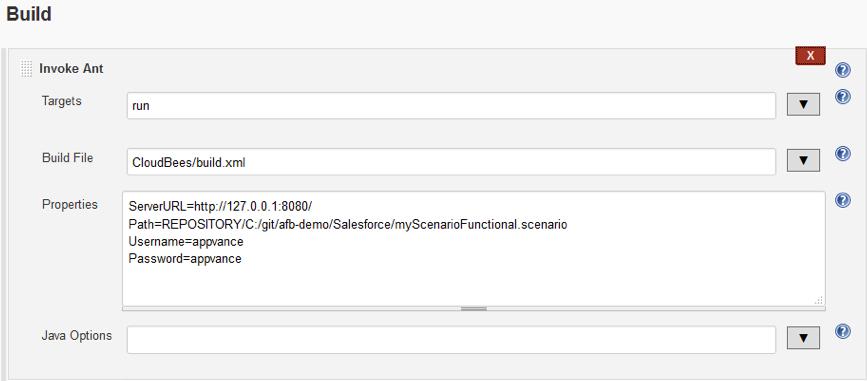
          Locate Invoke Ant in the Build options Enter run in the Targets box Click Advanced Enter CloudBees/build.xml in the Build File box (may vary if plugin self-hosted) Enter the following in the Properties box:
          ServerURL=<urlToAppvanceUTPServerIncludingPort>
          Path=REPOSITORY/<pathToScenarioFileIncludingScenarioNameAndFileExtension>
          Username=<appvanceUserName>
          Password=<appvancePassword>


          Notice the Path value contains REPOSITORY. Using the cloud version of Jenkins, users should specify scenarios availableautomation from a repositorycontrolled (i.e.CI/CD SVNworkflow.
          • Use approved credentials or GIT)
            Totoken runmanagement.
          • Parameterize scenariosenvironment, usingsuite, localbranch, files,and execution profile values.
          • Avoid storing secrets directly in Jenkins mustjob bedescriptions installedor ondocumentation.
          • Record Jenkins build URLs with AIQ execution evidence.

          Validation workflow

          1. Configure the Jenkins job with approved parameters.
          2. Run a localnon-production machine,validation afterbuild.
          3. Confirm whichAIQ localexecution pathsor canintegration beoutput.
          4. Document specifiedfailures inwith placeJenkins ofbuild REPOSITORYURL, pathsAIQ usingexecution SERVER.

          Click Save

          Running a Scenario

          Appvance IQ logging,ID, and a URL to further results, appear in Console Output as part of the project build logs.


          Last updated: JuneSeptember 26,20, 20232026

          If you have any feedback on this topic, please contact us at documentation@appvance.ai