
Understand TPS in AIQ Scalability Reports
How
Understand TPS values are calculated in AppvanceAIQ IQScalability scalabilityReports
TPS values are calculated in scalability report.reports Belowshould isbe interpreted with the scalabilitytest design, valid sample count, throughput, errors, and steady-state period in mind.
Recommended guidance
- Compare TPS only between runs with consistent scenarios, data, environment, and load model.
- Exclude ramp-up, ramp-down, and invalid intervals when analyzing steady-state behavior.
- Review errors and response times with TPS to understand scalability.
- Document the execution ID and report interval used for conclusions.
Validation workflow
- Open the
TPScompletedcalculation.scalability report. - Identify
Thetheformulasteady-statefor calculation isperiod. - Review TPS
=withTestthroughput,CasesresponsePassedtime,/and(durationerror rate. - Record the interpretation and assumptions in
seconds).From iteration summary report, we will get test cases passed and duration in seconds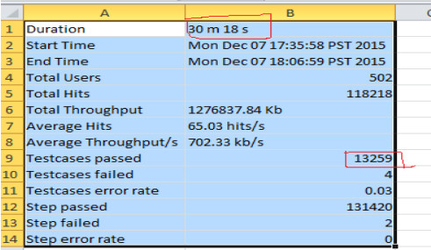
notes.Usingtheabove iterationreport7.29 TPS is calculated.For 502 (i.e for total users) iteration:7.29 TPS = 13259/ (30*60 + 18) sTake the iteration summary _801 and calculate 10.12 TPS.Iteration summary:
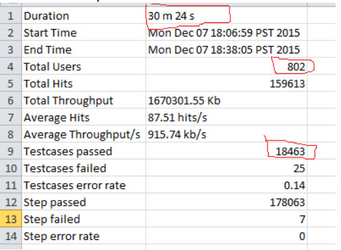
For 802(i.e for total users) iteration: 18463/ (30*60 + 24) s=10.12 TPS.
To calculate the Linear TPS:
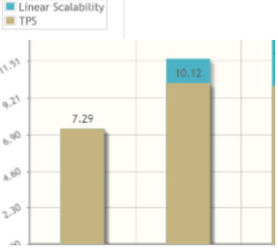
Linear TPS: 11.65 TPS = 802 * ( 7.29 / 502) Linear TPS= (total users in iteration summary which has linear scalability) * (TPS of preceding iteration summary/total user in preceding iteration summary).
Last updated: JuneSeptember 26,20, 20232026
If you have any feedback on this topic, please contact us at documentation@appvance.ai