
How TPS values are calculated in Appvance IQ scalability report
Understand
How TPS values are calculated in AIQAppvance ScalabilityIQ Reportsscalability
report?
Assuming that reader of this article has fair knowledge in creating the scenarios and viewing the reports. This document is intended to explain how the TPS and Linear TPS values are calculated in scalability reportsreport. shouldBelow be interpreted withis the scalability report for the TPS calculation.
The formula for calculation is TPS = Test Cases Passed / (duration in seconds).
From iteration summary report, we will get test design,cases valid sample count, throughput, errors,passed and steady-state periodduration in mind.seconds
Recommended
guidance
Compare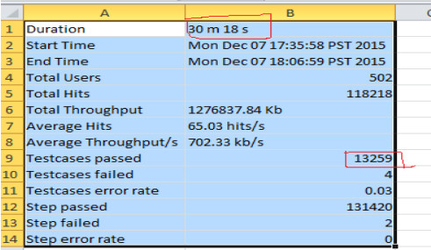
Using the above iteration report 7.29 TPSonlyisbetweencalculated.
runsForwith502consistent(i.escenarios,fordata,totalenvironment,users) iteration:
7.29 TPS = 13259/ (30*60 + 18) s
Take the iteration summary _801 andloadcalculatemodel.Exclude10.12ramp-up,TPS.
ramp-down,Iterationandsummary:invalidintervals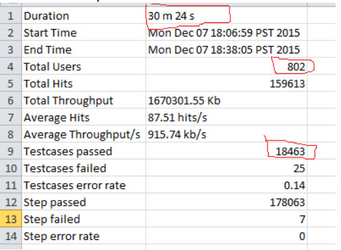
whenanalyzingFor
steady-state802(i.ebehavior.Reviewforerrorstotalandusers)responseiteration:
times18463/with(30*60 + 24) s=10.12 TPS.To calculate the Linear TPS:
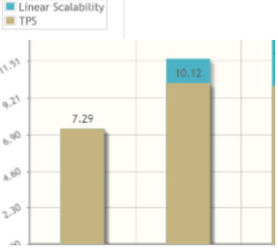
Linear TPS: 11.65 TPSto=understand802scalability.Document*the(execution7.29ID/and502)
reportLinearintervalTPS=used(totalfor conclusions.
Validation workflow
Open the completed scalability report.Identify the steady-state period.Review TPS with throughput, response time, and error rate.Record the interpretation and assumptionsusers intheiterationreportsummarynotes.
Last updated: SeptemberJune 20,26, 20262023
If you have any feedback on this topic, please contact us at documentation@appvance.ai